Blog
Book marketing social media: 90-day launch plan for authors

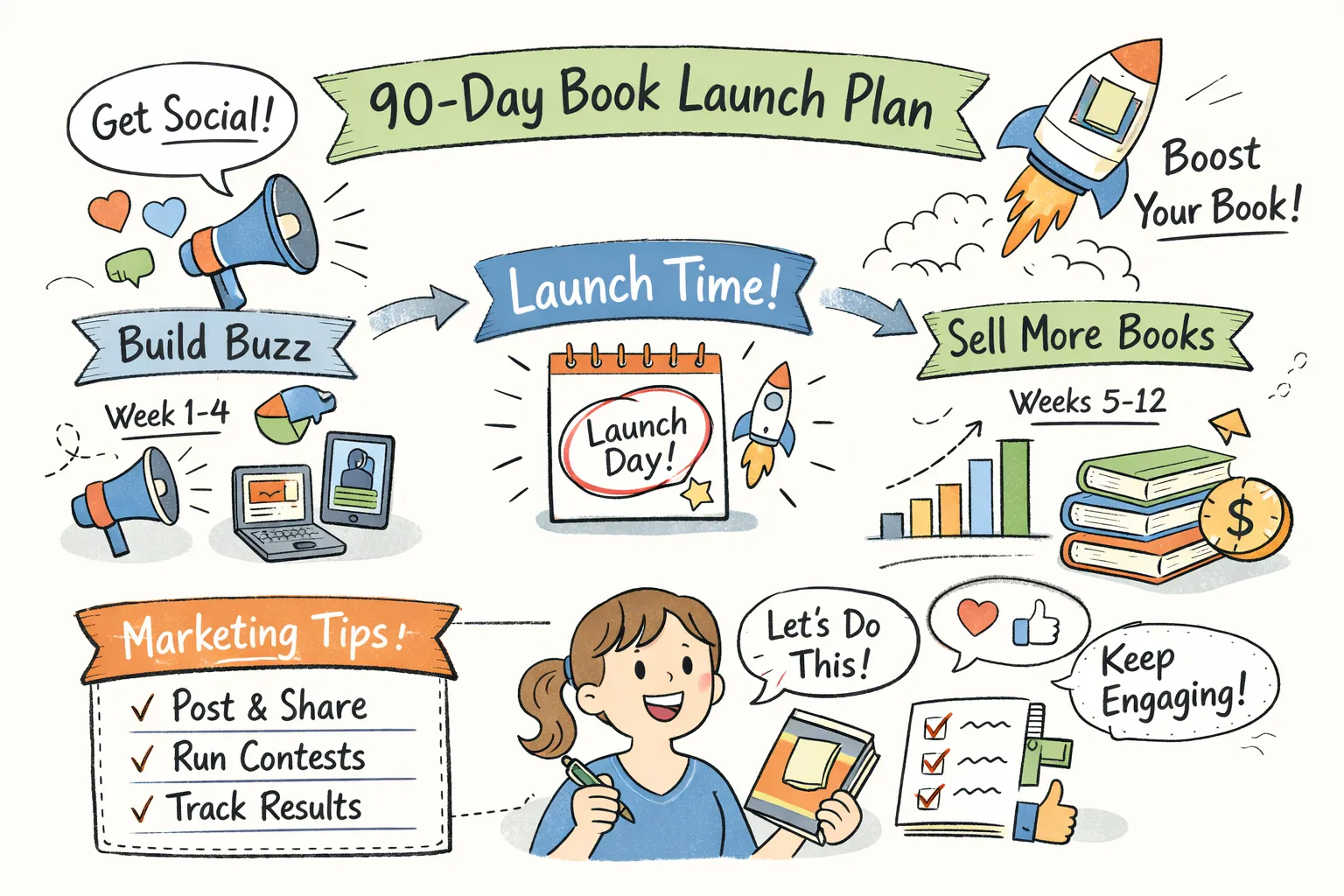
Want a launch that reaches real readers, not just likes? Book marketing social media works when platform signals align with buying behavior. This 90-day launch plan walks you through choosing platforms, learning audience habits by app, picking formats and posting cadence, and applying simple genre-to-platform rules that move copies into readers’ hands. Follow the schedule to capture preorders, early reviews, and a practical author marketing roadmap.
Start by matching audience to app so you spend time where readers actually are. Instagram’s core users are 18–34 and discovery favors carousels and Reels, which suit lifestyle hooks and polished author branding; TikTok rewards short-form videos and can drive viral discovery among younger buyers. Pinterest serves planning-focused, largely female audiences, Facebook reaches older readers and active groups for community conversion, and X helps amplify niche conversation and author commentary; choose one or two platforms that match your genre and test a single platform for 30 days before expanding.
Quick summary
- Choose 1–2 platforms. Match platform demographics to your genre and buying audience. Focusing on fewer channels keeps results measurable and easier to optimize.
- Follow the 90-day plan. Split the launch into grow, launch, and sustain phases with concrete goals like email signups and preorders. Run a single-platform test for 30 days to learn conversion before you expand.
- Batch content and set cadence. Post 3–5 times per week on your primary channel and 2–3 on a secondary, using Reels and carousels for Instagram, short videos for TikTok, and pins for Pinterest.
- Run lean ads. Test 2–3 creatives at $5–$10 per day for 10–14 days, target lookalikes or tight interest clusters, and send traffic to a focused landing page. Pause underperformers and scale winners quickly to keep spend efficient.
- Measure and delegate. Track key metrics and iterate weekly.
Platform choices: where book marketing social media works
a 90-day book marketing social media calendar you can copy
Split your launch into three clear phases: grow, launch, sustain. Days 1–60 focus on audience growth and preorders with sample goals such as 1,000 email signups and 300 preorders; days 61–67 are launch week with daily promotional pushes, and days 68–90 concentrate on gathering reviews and steady sales with a target of the first 30 reviews. Keep every post aimed at conversion and visibility so your social work feeds the sales funnel. For a task-oriented checklist to organize launch week and prelaunch tasks, consider using an Amazon Book Launch: A Strategic Checklist for a Successful Release to structure responsibilities and dates.
- Grow (Days 1–60): Focus on audience growth and preorders. Sample goals: 1,000 email signups and 300 preorders. Batch content, run small ad tests, and prioritize platform-native discovery formats.
- Launch week (Days 61–67): Execute daily promotional pushes, leverage countdowns and Lives, and maximize visibility across your primary channel and paid placements.
- Sustain (Days 68–90): Gather reviews, maintain paid and organic visibility, and aim for steady sales with a target such as the first 30 reviews. Use social proof to extend reach.
Use rotating weekly themes so content stays cohesive and repeat the seven themes on a 7-week loop to build recognition and platform learning. Each week should include one clear CTA: email signup, pre-order, buy, or review.
- Inspire and introduce
- Behind the author
- Tease and excerpt
- Engage and pre-sell
- Reviews and momentum
- Launch
- Reader impact
Repurpose a single creative into platform-native formats so you don’t reinvent the wheel. For example, turn a reading Reel into a 20–40 second TikTok clip with overlays and a link-in-bio call, convert key lines into an Instagram carousel with a pre-order CTA, and create Pinterest pins from cover shots and quote images that link to your buy page. Batch one recording session, pull quotes for carousels and pins, and schedule using a shared spreadsheet, Canva templates, and a scheduler like Later or Buffer to keep production efficient.
Platform playbook: Instagram, TikTok, Pinterest, Facebook and X
Treat each app as a distinct channel and match format to user intent. On Instagram, lead with a carousel or Reel that resolves a reader itch, use carousels for mini-excerpts or chapter reveals, and end captions with a question to spark comments. Save Stories for direct CTAs, countdowns, and link stickers that tend to convert better than passive posts.
TikTok rewards immediate hooks, so open with a one-to-three second clip that grabs attention and keep energy authentic and tight. Test trending sounds for reach, prioritize watch-completion, and favor short-read snippets, reaction videos, and fan content that perform especially well for fiction and emotional nonfiction. Use pinned comments to guide viewers to your link in bio or next steps.
Pinterest, Facebook, and X serve different discovery needs and deserve platform-specific optimization. Optimize pins for search with descriptive titles, high-quality images, and direct purchase links for cover concepts, mood boards, and gift guides. Use Facebook for book clubs, Lives, and targeted campaigns to older readers, and use X for threaded excerpts and short author commentary that can create pressable moments. Rotate hooks, measure saves and completion rates, and iterate weekly based on those signals.
Ads and budgets: small spends that move copies
Run lean ad tests that give clear signals fast. Start with two to three creatives at $5–$10 per day per creative for 10–14 days, target lookalikes or tight interest clusters, and send traffic to a focused landing page. Use CPM and CPC ranges as sanity checks. Expect CPMs roughly $6–$25 and CPCs around $0.15–$1.50 depending on platform and audience, then rotate creatives every three to four days and pause underperformers to find winners without overspending.
Test a handful of high-impact creative types:
- Author-read excerpt with captions and a strong hook in the first three seconds to stop the scroll
- Testimonial carousel that highlights short quotes, ratings, and blurbs to build trust
- 15–30 second problem-solution video that shows a reader pain point and how the book helps
Make the ad-to-cart path as frictionless as possible by focusing on speed and clarity. Ensure fast mobile page load, clear buy options and pricing, one prominent CTA, visible social proof like reviews, and an optional email capture for shipping or newsletter offers. Add UTM parameters to every ad link and set a thank-you workflow that captures purchase details and requests a review after delivery to feed campaign optimization. If you’re distributing through Amazon, apply platform-specific best practices from Book Marketing on Amazon: A Guide to KDP Strategies to optimize product detail pages and conversion signals.
Measure what matters: metrics that predict book sales
Track a small set of metrics that give real-time signals about demand and creative performance.
- Impressions and reach
- Click-through rate on posts and ads
- Landing page conversion to pre-order
- Cost per acquisition
- Email list growth
Monitor patterns—high impressions with low CTR points to creative issues, while strong CTR with low conversions usually indicates landing page friction.
Calculate cost per acquisition as total ad spend divided by purchases to understand efficiency; for example, $300 in spend for 10 purchases equals a $30 CPA. Set CPA targets by format and price and test until CPA sits comfortably below your breakeven threshold so campaigns can scale. Remember that a higher CPA can be workable if you have additional revenue streams or low distribution fees, but know your margins before increasing spend.
Use a tight reporting cadence and a compact dashboard you can scan in under five minutes. Monitor spend and CTR daily, review landing page conversion and CPA weekly, and refresh creatives every two weeks based on performance signals. Segment metrics by platform so you can compare Instagram, TikTok, Pinterest, Facebook, and X and turn those signals into repeatable creative tests that scale your book marketing social media efforts.
When to hire help: Bridge Publisher social media packages and a client case
Amazon Book Marketing, Bridge Publisher handles strategy, creative production, ad management, and reporting so your launch runs on a single calendar. Typical packages include a tailored launch strategy, a 6–12 week content calendar, creative shoots and edits, small ad tests, and weekly performance reports tied directly to preorders and conversion events. These services suit authors who have limited time, need polished creatives, or want a coordinated launch across channels and formats.
In one client engagement we built a six-week calendar, filmed two TikTok concepts and one Instagram Reel in a single batch, and ran a $5–$10 per day ad test for 10–14 days. We scaled the winning video and shifted budget to amplify preorders within two weeks, using content batching and rapid A/B testing to find messaging that resonated. That approach gave the author fast clarity on creative direction and a measurable sales lift.
Use this simple decision rule: hire if you can only commit under 5–7 hours per week, lack video skills, or need a multi-format launch; DIY the first round if you want to own the audience and learn the mechanics; partner to scale when you need advanced targeting, reporting, or creative ops. That rule helps you choose without overpaying too early. If you hire, make sure the scope includes clear KPIs tied to preorders and conversion events.
Final steps for book marketing social media success
Match content to the apps where your audience spends time, follow the 90-day calendar to keep momentum, and use rotating weekly themes so your feed stays consistent. Copy the calendar into your scheduler, pick one or two platforms from the playbook, and publish your first post today.