

Blog
How to Start a Project with a Ghostwriting Agency

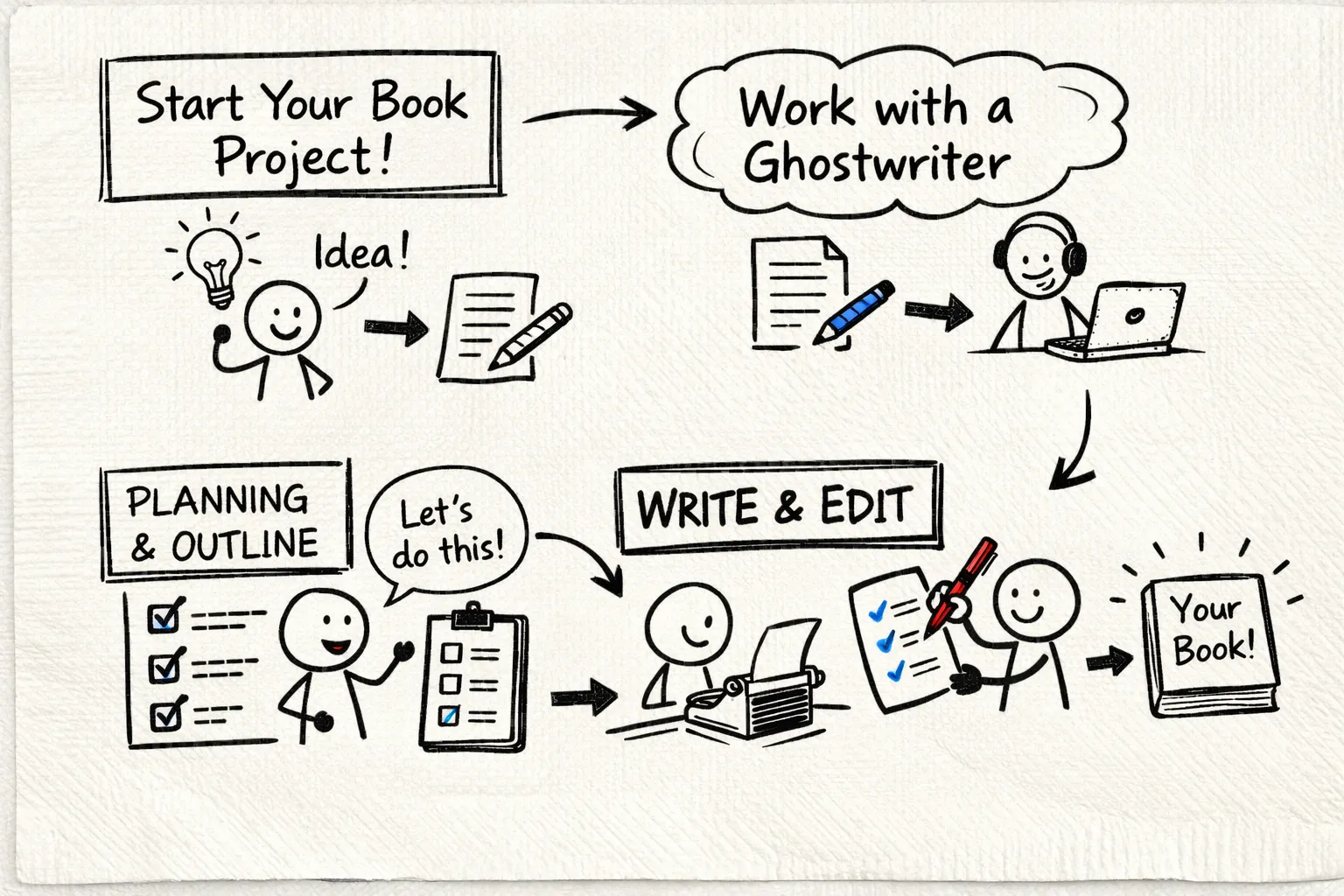
How to Start a Project with a Ghostwriting Agency
Starting a book can feel overwhelming, but a clear plan makes the process straightforward. To begin a project with a ghostwriting agency, decide what you want the book to do, such as thought leadership, memoir, business guide, or fiction; identify your readers, and set a target publication window so the agency can estimate scope and cost. Bring any existing materials, like talks, articles, or draft chapters, to speed research and make the initial discovery session productive.
This guide explains how to hire a ghostwriter and compare proposals by process, references, and deliverables rather than price alone. It covers typical pricing, when to request a paid sample chapter, key contract and NDA terms, and an onboarding checklist to keep your project on schedule.
Key takeaways
- Define the outcome: choose your book type, core message, ideal reader, target word count, and a publication window so an agency can estimate scope and cost.
- Assemble a brief: prepare a one-page packet with an elevator pitch, audience notes, chapter ideas, and any existing materials to accelerate discovery and research.
- Agree scope and budget: pick a pricing model, set payment milestones, and confirm deliverables and revision rounds to prevent scope creep.
- Lock legal terms: use a contract and NDA that specify rights, ownership, and revision limits.
- Onboard and track: provide an onboarding packet, run disciplined draft-revision cycles, and use shared timelines to keep the project on schedule.
Quick roadmap
That early clarity becomes the decision criteria you use when vetting agencies.
- Discovery and planning: 2 to 4 weeks
- Research, interviews, and outlining: 2 to 6 weeks
- Manuscript drafting: 3 to 9 months
- Revisions and editing: 1 to 3 months
- Proofreading and formatting: 2 to 6 weeks
When you’re ready to move forward, share your one-page brief and preferred timeline so the agency can produce a scoped proposal. Below you’ll find details on contract terms, pricing, and an onboarding checklist to help turn a proposal into an executable plan.
Prepare your brief and shortlist agencies
Build a one-page brief that answers the essentials: an elevator pitch, audience profiles, a chapter-by-chapter outline, any existing drafts, recorded interviews, and a list of subject-matter experts to interview. A clean packet accelerates research and keeps estimates accurate so you can compare proposals fairly.
Use the brief to guide vendor conversations and reveal process and priorities. Request a sample contract or statement of work, ask how writers are paired, and clarify revision policy, typical timelines, and voice-capture methods. Check for relevant samples and prior clients in your industry; whether a single lead writer or a multi-writer team will own your manuscript signals how the agency will prioritize your project. (If you prefer an individual writer rather than a team, look for a professional book writer for hire.)
Confirm fit with a short paid trial before committing to full drafting. Agree on an outline or a 1,000- to 2,000-word chapter to test voice match, turnaround, and receptiveness to feedback. Make sure the trial work is covered by your contract and NDA so confidentiality and rights are clear, then use full proposals to compare scope, deliverables, and included revision rounds. If you need help formalizing the chapter plan, consider engaging a book outline ghostwriter to create a clear, testable structure.
After shortlisting, you should have comparable proposals that show estimated hours, milestones, and exclusions. Use those proposals to select the agency that best matches your timeline, budget, and target author voice.
Set scope, budget, and payment milestones
Choose a pricing model that fits your goals: common approaches include flat project fees, hourly retainers, per-word rates, and hybrid royalty arrangements. For a 50,000- to 70,000-word nonfiction book, fees can range from the low five figures to the mid six figures depending on writer experience and included services; ask for tiered quotes so you can benchmark proposals.
Link payments to deliverables so momentum stays steady and risk is shared. Typical milestones include a deposit, approved outline, half draft, full first draft, and the final accepted manuscript. A common split is 25% deposit, 25% on outline or first-draft milestone, 40% on full draft completion, and 10% on the final manuscript, which keeps both sides accountable.
Prevent scope creep by defining what counts as a revision versus a new deliverable and by setting an hourly or per-chapter rate for extra work. Include a clear change-order process in the statement of work so price and timeline adjustments are submitted, priced, and approved before additional work begins. Compare proposals using the same pricing matrix and milestone schedule so you evaluate apples to apples and choose a partner whose deliverables match your expectations.
Once scope and payment terms are agreed, move the statement of work into contract review so legal terms align with project milestones and the onboarding plan. Have an attorney or an experienced publishing lawyer confirm deliverables, payment triggers, and intellectual property clauses before you sign.
Contracts, NDAs, and rights to protect your book
Treat the contract as the project’s foundation and be specific. Spell out deliverables, chapter or total word counts, the number of revision rounds, and whether the agreement is work-for-hire or a copyright assignment that transfers full rights to you. Include a moral rights waiver so the writer cannot later claim attribution or alter the work in ways that harm your brand.
Include an NDA that covers interview recordings, excerpts, and proprietary research you share, and require an originality warranty certifying the manuscript is unpublished and free of plagiarism. If any AI-assisted drafting is permitted, define acceptable AI use, require disclosure, and state that the agency cannot reuse your material elsewhere without written permission. Those clauses protect your intellectual property and your reputation as the named author.
Use a concise, attorney-ready checklist during negotiations. Key items include:
- Statement of work: clear deliverables, chapter or total word counts, milestones, and exclusions.
- Payment schedule and kill fee: deposit, milestone payments, final payment, and compensation if the project is terminated.
- Revision limits and turnarounds: number of included revision rounds, expected response times, and change-order process.
- Originality warranty and moral rights waiver: certification of unpublished, original work and waiver of moral rights as appropriate.
- NDA covering recordings and research: confidentiality for interviews, transcripts, and proprietary materials.
- Dispute resolution and governing law: chosen jurisdiction and method for resolving conflicts.
- Sample clause language: ready text for ownership transfer, AI disclosure, and other common items to speed legal review.
Bring this checklist to your first contract meeting so you can negotiate efficiently and move into production once the paperwork is signed.
Onboard the writer and run the draft-revision cycle
Begin onboarding with a complete packet that removes friction on day one: the signed SOW and NDA, the initial payment receipt, a completed client questionnaire, and a shared project workspace so everyone has one source of truth. Add brand guides, prior content samples, an interview schedule, and any logins the writer needs. A complete packet speeds research and prevents scope questions from derailing momentum.
Capture your voice deliberately by scheduling a series of recorded interviews and one or two longer voice-capture sessions so the writer learns your cadence and phrasing. Provide three audience-facing samples that reflect the tone you want, and share raw recordings or transcripts to accelerate accuracy. Those assets help the writer draft confidently and reduce the need for heavy rewrites.
Agree on a delivery cadence before the first draft arrives, either chapter-by-chapter or in milestone batches, with clear deadlines for your feedback and a stated number of included revisions. Use numbered versioning and a single comment platform to avoid parallel threads, and request feedback within five to seven business days per round to keep timelines realistic. Ask for prioritized notes (must-fix, consider, style) and require tracked changes for line edits so nothing is lost; after revision cycles, convert those drafts into a polishing plan for developmental edits, proofreading, and final formatting.
Track milestones, spot red flags, and next steps with Bridge Publisher
Keep everything visible with shared timelines, milestone checklists, and calendar reminders so approvals, interviews, and payment triggers are clear to everyone. Tools like Notion, Asana, or a well-organized Google Sheet make it easy to see what’s overdue and who is responsible, and weekly status notes help small delays surface before they become schedule risks.
Watch for common red flags and address them quickly.
- Vague statement of work: ambiguity about deliverables or milestones.
- Missing sample contracts: no template SOW or agreement to review.
- Reluctance to transfer rights: hesitation around ownership or assignment language.
- Agencies that dodge references: unwillingness to share past client contacts or examples.
- Slow response times during a trial: delayed communication in the vetting phase that likely predicts future delays.
If responsiveness lags in the trial phase, expect the same later and insist on a paid trial deliverable to test reliability and communication. Those checks reduce scope creep and protect your timeline and investment.
Next steps
This compact roadmap gives you the concrete steps to start a project with a ghostwriting agency. Begin by choosing the outcome you want and assembling a one-page brief that outlines your target reader, core message, and three sample chapter ideas. Set scope, budget, and payment milestones up front to keep negotiations practical and focused.
Take one concrete action today: draft your one-page brief listing the book’s purpose, ideal reader, three chapter concepts, and a preferred timeline, then visit Get the Best Ghostwriting Services for Your Book to email that brief to Bridge Publisher for a free project review and a 30-minute discovery call. That step gives our team the details needed to propose a scoped plan and realistic budget, and creates a clear next milestone so you can move the book toward publication.
